A BuyGetRewards Collection
Au Naturel
100% natural fibers. No polyester. No nylon. No compromises. The Editorial Staff has opinions, and they are all peer-reviewed.
For several thousand years, human beings wore cotton, linen, wool, and silk. Then we invented polyester and decided that was better. The Editorial Staff respectfully disagrees, and has brought data.
From the Editorial Staff
Dispassionate assessments of why natural materials remain, after several thousand years, the correct choice.
The Case for Cotton: What the Research Actually Says
The Editorial Staff does not traffic in alarmism. We traffic in peer-reviewed literature, which is sometimes worse. In 1992, Dr. Ahmed Shafik and colleagues measured electrostatic potentials on the scrotal surface of 21 men wearing different fabrics and reported that cotton generated no measurable charge while polyester generated a mean of 338.9 V/cm² (Shafik, Ibrahim & el-Sayed, Andrologia, 1992, PMID 1503251) — that part is straightforward physics and easy to replicate. Shafik then went further, reporting reversible azoospermia in a small group of men wearing polyester slings, and similar effects in dogs (Shafik, Contraception, 1992, PMID 1623716; Shafik, Urological Research, 1993, PMID 8279095; Shafik, Journal of Obstetrics and Gynaecology, 2008, PMID 18393023). The Editorial Staff is not going to present those findings as settled science, because they are not: the human study involved 14 men in an unusual experimental setup (a scrotal sling, not ordinary underwear), no independent research team has replicated Shafik’s results in the three decades since, and a larger 2018 cohort of more than 500 couples found no meaningful association between underwear style and time-to-pregnancy. Fertility specialists generally attribute underwear-related effects on sperm to poor breathability and elevated scrotal temperature, not to an electrostatic mechanism unique to polyester. What survives, honestly: cotton breathes better and does not generate a static charge, which is a real, measurable, unremarkable fact about fabric. What does not survive: any claim that switching to cotton underwear treats, prevents, or reverses infertility. If fertility is an actual concern, see a doctor, not a laundry basket.
— The BuyGetRewards Editorial Staff
Your Polyester Shirt Sheds 700,000 Plastic Fibers Per Wash. You Are Wearing Them Too.
The Editorial Staff would like to discuss what happens when you launder a polyester garment. A single domestic wash cycle releases up to 700,000 synthetic microfibers into the water supply (Napper & Thompson, Marine Pollution Bulletin, 2016). Collectively, laundry sends roughly half a million tonnes of plastic microfibers into the ocean every year — textiles account for 34.8% of global microplastic pollution, making your wardrobe the single largest source of primary microplastics on Earth. France, having evidently read the literature, became the first country to mandate microfiber filters on all new washing machines as of January 2025. A 2024 study found that recycled polyester — the kind marketed as the sustainable option — actually sheds more microfibers than virgin polyester (1,193 vs. 908 fibers per wash cycle). But the microfibers do not merely pollute the ocean. A 2023 review in Frontiers in Endocrinology (Ullah et al., PMID 36726457) documented that microplastics smaller than 10 micrometers reduce testosterone concentration, decrease sperm quality, and cause testicular inflammation in animal models. In female models, microplastic accumulation in ovarian tissue reduced follicle growth, decreased anti-Müllerian hormone levels, and led to granulosa cell apoptosis and ovary fibrosis — with decreased pregnancies and increased mortality in those animal models. A 2025 systematic review of human microplastic exposure found that human evidence remains limited and largely observational, and that findings from animal and lab studies do not by themselves prove the same effects occur in people. The particles act as transport vehicles for phthalates, bisphenols, and other endocrine-disrupting chemicals that bind to hormone receptors across the hypothalamic-pituitary-gonadal axis. Cotton sheds fibers too. The difference is that cotton fibers biodegrade in months. Polyester fibers persist for two hundred years, accumulating in marine sediment, drinking water, and human tissue. The Editorial Staff checked its cotton t-shirt for microplastic shedding. It found none, because cotton is not plastic. We moved on.
— The BuyGetRewards Editorial Staff
What Is Actually in Your Synthetic Clothing: A Chemical Inventory
The Editorial Staff recently reviewed a 2022 study from Stockholm University (Luongo et al., Textile Research Journal, PMC 9542814) that analyzed synthetic garments on the Swedish market for hazardous chemicals. The findings were, in the measured opinion of the Editorial Staff, not ideal. Forty-four percent of garments tested contained 4-nitroaniline. Thirty-nine percent contained 6-chloro-2,4-dinitroaniline. Individual arylamine concentrations reached 3 mg/g — one hundred times higher than the EU regulatory limit of 30 µg/g. One black t-shirt contained arylamines at concentrations approximately 3,500 times higher than the detected azo dyes. The researchers also made the first-ever identification of halogenated dinitrobenzene compounds in commercial garments, including 1-chloro-2,4-dinitrobenzene (2,4-DNCB), described in toxicology literature as an ‘extreme skin sensitizer,’ found in 6% of garments tested. These chemicals exist in synthetic textiles because disperse azo dyes — used to color polyester, nylon, and acetate — do not chemically bond to the fibers. Their small, lipophilic molecules migrate freely onto the skin of the wearer, particularly when the textile is warm or damp (Malinauskiene et al., Contact Dermatitis, 2013, PMID 23289879). Approximately 60% of all disperse dyes are azo compounds. They are not used to dye natural fibers. A separate review covering 22 years of published literature (1990–2012) confirmed disperse dyes as the most prevalent cause of textile-related allergic contact dermatitis. Cotton is dyed with reactive dyes that form covalent bonds with the cellulose fiber. They do not migrate. They do not require arylamines. The Editorial Staff is wearing a cotton shirt. It contains cotton.
— The BuyGetRewards Editorial Staff
The Skin Microbiome Prefers What You Wore Before 1941
The Editorial Staff has been reading about the skin microbiome, which is the roughly 1.8 million bacteria per square centimeter that live on the average human and would prefer not to be disturbed. A 2021 review in the International Journal of Molecular Sciences (Karagas et al., PMC 8226598) documented that antimicrobial agents routinely applied to synthetic textiles — including triclosan, silver nanoparticles, and quaternary ammonium compounds — disrupt the skin’s commensal bacterial community. Triclosan, specifically, is classified as an endocrine disruptor. It moves through human tissues, causes oxidative stress, apoptosis, and inflammation in cells, and its use in textiles is, per the review, ‘expected to decline’ due to harmful side effects. Silver nanoparticles, marketed as odor-preventing technology in athletic wear, ‘could affect the skin microbiome in a negative manner.’ These broad-spectrum antimicrobials, the authors note, ‘can have detrimental effect on the skin microbiome and potentially worsen body malodour’ — achieving the precise opposite of their marketed purpose. Meanwhile, zinc oxide — used in cotton finishing for millennia — is an essential trace element that the FDA recognizes as a topical skin-protectant ingredient in OTC drug products, and dermatology literature describes anti-inflammatory and soothing effects; it is not itself a treatment for eczema, neurodermitis, or atopic dermatitis, and a zinc-oxide-finished cotton shirt is clothing, not medicine. Cotton textiles finished with zinc oxide also provide UV absorption. The first synthetic fiber, nylon, was introduced in 1938. Polyester followed in 1941. The human skin microbiome evolved over approximately 200,000 years wearing animal hides, wool, cotton, linen, and silk. It has had 83 years to adapt to polyester. The Editorial Staff suspects it has not.
— The BuyGetRewards Editorial Staff
Linen: 34,000 Years of Field Testing, Zero Product Recalls
The Editorial Staff wishes to report on the longest product trial in recorded history. In 2009, archaeologists working in Dzudzuana Cave, in the foothills of the Caucasus in Georgia, recovered spun, dyed wild flax fibers dated to approximately 34,000 years ago (Kvavadze et al., Science, 2009, vol. 325, p. 1359). Human beings, in other words, were processing linen roughly 30,000 years before the invention of writing, and the material performed well enough that the ancient Egyptians later entrusted it with their most demanding preservation use case. Some of those burial linens remain intact today, which the Editorial Staff notes is a warranty period polyester has not yet had the opportunity to match. The performance characteristics explain the loyalty. Flax fiber absorbs moisture up to roughly 12% of its weight before feeling damp — versus approximately 0.4% for polyester, which does not so much absorb sweat as redistribute it. Linen dries faster than cotton, conducts heat away from the body more efficiently than nearly any common fiber (the reason it reads as ‘cool to the touch’ rather than ‘a fabric having a temperature opinion’), and — in a property the Editorial Staff finds genuinely charming — flax fiber is stronger wet than dry, which is to say the washing machine improves it. It also softens with every wash while losing essentially none of its tensile strength, a depreciation curve that runs in the owner’s favor. We track electronics on this website, where twelve months is a product generation. We are aware of the irony. The linen has been in testing for 34 millennia. It passed. We moved on.
— The BuyGetRewards Editorial Staff
Wool Does Not Burn, Does Not Smell, and Does Not Care What the Thermostat Says
The Editorial Staff conducted a review of wool’s material properties and emerged with the unsettling impression that the sheep had solved problems the synthetics industry is still monetizing. Begin with fire, since the comparison is vivid. Wool’s high nitrogen and moisture content make it naturally flame-resistant: it requires roughly 570–600°C to ignite, chars rather than melts, and tends to self-extinguish when the flame source is removed. Polyester melts at approximately 250°C and drips as molten polymer onto whatever is beneath it, which in the relevant scenario is you. This is why flame-exposed professions have historically specified wool and why the fine print on synthetic base layers advises keeping them away from open flame — advice the Editorial Staff finds notable in a garment category marketed for campfires. Next, moisture. Wool can absorb up to roughly a third of its own weight in water vapor before feeling wet, and — via a genuine thermodynamic property called heat of sorption — it releases small amounts of heat as it absorbs moisture, warming the wearer precisely when they are damp and cooling by the reverse process when conditions dry. It is, in effect, a passive climate-control system with no firmware to update. Finally, odor. The mechanism is unglamorous: keratin binds odor-causing compounds while wool’s moisture management denies bacteria the humid microclimate they require, which is why merino wearers report multi-day use without social consequences and why synthetic athletic wear requires an entire category of antimicrobial finishes to approximate what the fiber does by existing (see our earlier reporting on what those finishes do to the skin microbiome). The sheep, it should be noted, arrived at this solution without filing a patent. The Editorial Staff records this with something adjacent to envy, and moves on.
— The BuyGetRewards Editorial Staff
The Thread Count Racket: A Number That Got Better as the Sheets Got Worse
The Editorial Staff spends its days verifying that advertised discounts are real, so it was professionally offended — though not surprised — to discover that bedding’s favorite quality metric is routinely manufactured the same way as a fake sale price. Thread count is the number of yarns per square inch of fabric. For most of textile history it topped out around 400, because that is approximately how many single yarns physically fit. The four-digit counts on modern packaging are achieved by weaving multi-ply yarns — several thin, often lower-grade strands twisted together — and then counting each ply individually. Twist three mediocre strands into one yarn, count it as three, and a 333-thread-count sheet becomes a ‘1000 thread count’ sheet without a single fiber improving. The industry terms this creative counting; the Editorial Staff terms it the same anchor-price theater we document on electronics, performed in percale. What actually predicts a good sheet: fiber staple length (long-staple cottons such as Pima or Egyptian run roughly 34–38mm versus ~26mm for ordinary upland cotton — longer fibers mean smoother, stronger yarn), single-ply construction, and an honest weave — crisp percale at a true 200–300, or sateen somewhat higher, both of 100% cotton and neither apologizing for the number. The same logic governs towels, where the honest metric is fabric weight: roughly 400–600 GSM of 100% cotton covers everything from quick-drying gym towels to the hotel-heavy ones, and ‘800GSM ultra-plush microfiber’ is a sentence containing plastic. Our advice is the advice this website always gives: ignore the number engineered for the banner, buy the material, and check the price history — bedding ‘sales’ exhibit some of the most decorative original prices we track. The Editorial Staff sleeps on a true 270-thread-count percale, verified by someone else’s microscope, and sleeps fine.
— The BuyGetRewards Editorial Staff
The Vetted Collection
6 products that passed composition vetting — the full listing checked for synthetics, not just the title. Listed on merit, sale or not; when a real discount appears, the badges will say so.

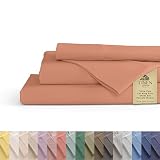


Why Natural Fibers
Breathability
Cotton and linen allow air circulation that synthetics physically cannot replicate. Your body regulates temperature better.
Biodegradable
A cotton t-shirt decomposes in months. A polyester one takes 200+ years. The planet notices.
Fewer Known Irritants
Natural fibers are linked to fewer reported skin reactions than some synthetic finishes; ‘hypoallergenic’ has no FDA-regulated meaning, and no fabric is guaranteed reaction-free. Natural fibers also do not shed microplastics.
Durability
Quality cotton gets softer with every wash. Polyester pills. Wool lasts decades. The math favors nature.
The Editorial Staff will continue to monitor prices on natural fiber products with the same rigor applied to MacBooks, which is to say: obsessively.
Browse All Deals →