A BuyGetRewards Collection
Corpus Naturale
What you put in your body. Ancient remedies that survived peer review. The Editorial Staff has opinions, and they are all cited.
For several thousand years, human beings chewed tree resin, dissolved mineral pitch in warm water, and added turmeric to everything. Then we invented gummy vitamins and called it progress. The Editorial Staff has read the studies. Some of it holds up, a lot of it is thinner than the marketing suggests, and none of it is medical advice.
From the Editorial Staff
Comprehensive assessments of substances that have been keeping humans alive longer than your supplement company has existed.
Mastic Gum: The 2,500-Year-Old Chewing Habit With a Modest, Real Evidence Base
The Editorial Staff would like to discuss a resin that has been chewed on the Greek island of Chios since approximately 500 BC, which is roughly 2,470 years before anyone thought to put collagen in a gummy bear. Mastic gum is the crystallized sap of Pistacia lentiscus var. Chia, a tree that grows almost exclusively in southern Chios and has, to date, resisted every attempt at cultivation elsewhere. The tree simply refuses to produce resin outside its preferred terroir, a fact the Editorial Staff finds admirable. The human research is small and early, and the Editorial Staff will not dress it up as more than that. Mastic gum is a dietary supplement, not a drug; it has not been evaluated by the FDA to diagnose, treat, cure, or prevent any disease, and anyone managing a digestive condition should be working with a clinician, not a resin. For the jaw enthusiasts: mastic in its raw tear form provides sustained chewing resistance, because it is, in point of fact, actual tree resin.
— The BuyGetRewards Editorial Staff
Turmeric and Curcumin: 294 Studies, One Bioavailability Problem, and a Solution That Has Existed Since Antiquity
The Editorial Staff has reviewed a meta-analysis of 294 scientific articles on curcumin published between 2004 and 2023 (El-Saadony et al., Frontiers in Nutrition, 2023, PMC 9881416), alongside NCCIH’s own review of the evidence. The honest summary, per NCCIH: ‘We don’t know enough to definitively conclude if turmeric or curcumin is beneficial for any health purposes.’ Laboratory research has documented that curcumin affects several inflammatory and cell-signaling pathways; a handful of small human trials in specific conditions, such as knee osteoarthritis, have reported symptom improvement, but NCCIH says higher-quality evidence is needed before drawing conclusions, and the Editorial Staff is not going to draw them here. Curcumin is not a treatment for cancer, arthritis, kidney disease, or high cholesterol, and none of the studies above establish that it is. Here is the part that is not in dispute: free curcumin has, in the measured terminology of the pharmacological literature, ‘extremely poor bioavailability.’ Most of an oral dose is not absorbed. The fix has existed for approximately 3,000 years in Indian cuisine: black pepper. Piperine, the active compound in black pepper, has been shown in pharmacokinetic studies to substantially increase measured curcumin absorption — that is peer-reviewed pharmacokinetics, not a health-outcome claim. Meriva, a curcumin-soy lecithin complex, and Longvida, a solid lipid formulation, are enhanced-absorption forms sold on that basis. One caution NCCIH flags explicitly: liver injury has been reported in some people using these higher-bioavailability curcumin formulations; anyone who develops fatigue, nausea, dark urine, or yellowing skin or eyes while taking curcumin should stop and see a doctor. Turmeric and curcumin supplements have not been evaluated by the FDA to diagnose, treat, cure, or prevent any disease. The Editorial Staff’s position is straightforward: curcumin without piperine or an enhanced delivery system mostly passes through you unabsorbed — and even with better absorption, talk to a clinician before using it for a medical condition. Choose accordingly.
— The BuyGetRewards Editorial Staff
Magnesium: Half the Country Is Short on It, and the Cheap Version Mostly Exits Unread
The Editorial Staff took an interest in magnesium for the same reason it takes an interest in anything: the numbers were being misrepresented at the point of sale. The mineral participates in over 300 enzymatic reactions — muscle function, sleep architecture, nervous-system regulation — and analyses of national dietary data (NHANES) have repeatedly found that roughly half of Americans consume less than the estimated average requirement. So far, a nutrient with a legitimate case. The trouble begins on the supplement aisle, where the dominant form — magnesium oxide — persists for one reason: it is the cheapest to manufacture and the densest on the label. Oxide is about 60% elemental magnesium by weight, which looks marvelous on the Supplement Facts panel. Its measured bioavailability, however, is approximately 4% (Firoz & Graber, Magnesium Research, 2001, PMID 11794633) — the remaining 96% proceeds through the gastrointestinal tract with the single-mindedness of a commuter, which is why oxide’s most reliable clinical application is, to put it as the Editorial Staff prefers, regularity. A controlled comparison found magnesium citrate meaningfully more bioavailable than both oxide and an amino-acid chelate over 60 days of supplementation (Walker et al., Magnesium Research, 2003, PMID 14596323), and magnesium glycinate — the mineral bound to glycine — is the form typically chosen when gastrointestinal tolerance matters. The arithmetic the label will not do for you: a 500mg magnesium oxide capsule delivering 4% absorption yields roughly 12mg of usable mineral, while a smaller dose of citrate or glycinate delivers several times that. Per absorbed milligram, the ‘expensive’ forms are the discount. We computed elemental yields before breakfast, because we compute everything, and we moved on.
— The BuyGetRewards Editorial Staff
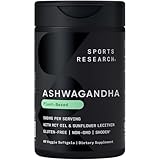
Ashwagandha: The Root With a Placebo-Controlled Trial and a Heavy-Metal Homework Assignment
The Editorial Staff approaches adaptogens the way it approaches Black Friday banners — assuming theater until the data files an appearance. Ashwagandha (Withania somnifera), a root used in Ayurvedic practice for roughly three thousand years, is one of the few in its category that arrives with modern receipts. In a prospective, randomized, double-blind, placebo-controlled trial, 64 adults with chronic stress took 300mg of a full-spectrum root extract twice daily for 60 days (Chandrasekhar, Kapoor & Anishetty, Indian Journal of Psychological Medicine, 2012, PMID 23439798). The treatment group’s perceived-stress scores fell by 44%, and — the finding that got the Editorial Staff’s attention, since it is a number a laboratory can verify — serum cortisol dropped 27.9% relative to baseline, significantly outperforming placebo. Subsequent trials have pointed the same general direction on stress and sleep measures, though NCCIH’s own review is more measured: evidence on anxiety specifically is unclear, and there isn’t enough evidence yet for ashwagandha’s other traditional uses. This is a dietary supplement, not an FDA-evaluated treatment for a diagnosed stress or anxiety condition. Now the homework. Ashwagandha is a root crop and a nightshade, and roots are diligent accumulators of whatever is in their soil, including heavy metals. It is also sold at wildly varying potency — extracts are standardized by withanolide content, and a label that does not state its withanolide percentage and its source (root versus leaf) is a label asking for trust it has not earned. The Editorial Staff’s standing guidance on supplements applies with full force: no certificate of analysis from an independent laboratory, no purchase. We would also note, in the spirit of recited risks, that ashwagandha is not for everyone — it is conventionally avoided in pregnancy and warrants a professional conversation for anyone with thyroid conditions or on sedatives, because ‘natural’ describes a supply chain, not an absence of pharmacology. The root works. Verify the paperwork. We did, and we moved on.
— The BuyGetRewards Editorial Staff
Extra Virgin Olive Oil: The Most Counterfeited Food in Your Kitchen Has a Harvest Date. Find It.
The Editorial Staff runs a website dedicated to detecting fake discounts, so it reports the following with something adjacent to professional admiration: the olive oil aisle is running the same con, at scale, on a food. In 2010, researchers at the UC Davis Olive Center tested imported oils labeled ‘extra virgin’ from California retail shelves and found that 69% of samples failed to meet international (IOC) and USDA sensory standards for the grade — defective, oxidized, adulterated with refined oil, or simply not what the label announced. Extra virgin is a legal grade with laboratory criteria, and most of the imported product wearing the phrase could not pass the exam. This matters beyond principle, because the health case for olive oil is a case for the real thing. The PREDIMED trial — one of the largest dietary intervention studies ever conducted, with over 7,000 participants at high cardiovascular risk — found that a Mediterranean diet supplemented with extra virgin olive oil was associated with roughly 30% fewer major cardiovascular events than a low-fat control diet (New England Journal of Medicine, 2013). The paper was later retracted over randomization irregularities at some study sites and republished in 2018 with corrected statistics; the adjusted results were essentially unchanged, which the Editorial Staff regards as the correction process working — not as proof that olive oil treats or prevents heart disease for any individual reader. This is dietary-pattern research, not a prescription; talk to a doctor about cardiovascular risk. The protective compounds are polyphenols, and polyphenols are perishable — they degrade with time, heat, and light, which converts the purchasing decision into a freshness problem. The tells, in order of usefulness: a stated harvest date (not a best-by date, which is two years of optimism printed in ink) within the last year; dark glass or tin; a named region or estate rather than a flag-colored map; and a price consistent with the fact that olives are a crop, not a byproduct. ‘Cold pressed,’ on modern centrifuge-extracted oil, is largely a decorative phrase. The Editorial Staff checked its own bottle: harvest date November, dark glass, faintly peppery at the back of the throat — the polyphenols announcing themselves. It passed. We made lunch and moved on.
— The BuyGetRewards Editorial Staff
The Provisions
3 products that cleared the authenticity gate — independent-lab language, disclosed doses, no snake oil, real review history. Listed on merit, sale or not.


Why These Two
Mastic Gum
Chewed since 500 BC. Human research is small and early, and it is not FDA-evaluated for any health use. Also makes your jaw look better, which the studies did not need to prove.
Turmeric + Piperine
294 studies reviewed; NCCIH says evidence remains inconclusive for most health uses. Piperine (black pepper) measurably boosts curcumin absorption — that part is settled pharmacokinetics. India figured out the pairing 3,000 years ago.
The Editorial Staff will continue to investigate what belongs in the human body with the same thoroughness applied to what belongs on it.
Au Naturel →All Deals →