The MacBook Air M4, Age One and a Half: A Longitudinal Reading of the Reviews
The MacBook Air M4 has now existed for a year and a half. The Editorial Staff read what the critics said, at launch and since, and traced how its standing in the lineup has changed. A full report, with Methods.
Revised September 28, 2026: findings now come from the published sources cited at the end, not from tests or price logs the Editorial Staff never kept.
Background and Aims
The MacBook Air M4 13-inch went on sale March 12, 2025, with a 15-inch sibling following the same week. It has now existed for a year and a half. Readers asked, reasonably, what the longer record shows, so the Editorial Staff went and read it.
Our aims were three: determine what critics said when the M4 launched, determine whether that assessment held up as coverage continued, and determine where the M4 now sits now that Apple has moved the lineup forward again. This is an observational study, in the sense that we observed other people's observations.
Methods
We read the review record. MacRumors' review, SlashGear's review, and Jason Snell's review for Six Colors covered launch week. MacRumors' M4-versus-M5 buyer's guide, published after the successor's debut, covered how the assessment held up. MacRumors' report on Apple's M5 announcement and its companion report on that week's discontinuations covered where things stand now. A notable finding was defined, informally, as anything a reviewer bothered to write a full paragraph about.
Results
At launch: the consensus was that Apple had made a familiar laptop meaningfully better without changing much about what it looked like. MacRumors framed the update around an M4 chip delivering up to 30 percent faster multi-core performance than the outgoing M3 and a new 12-megapixel camera with Center Stage. Snell called the M4 the "largest jump in processor performance" the Apple silicon Air line had seen, and noted that Apple could at last sell a brand-new Air with 16GB of unified memory at its entry price, rather than keeping older models around to fill the budget slot.
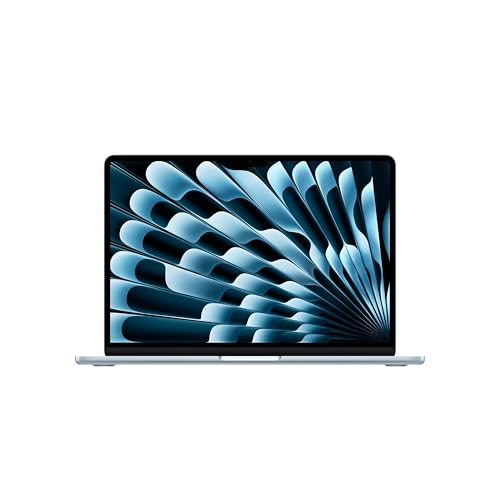
Not every reviewer agreed on everything. The new Sky Blue finish drew mixed reactions: Snell described it as "silver with a blue undertone" and wrote that Air users should be given at least one fun color option, while SlashGear called the same finish the best colorway the reviewer had seen on a Mac. SlashGear otherwise flagged the persistent display notch as "an eyesore," a 30W charging brick that has not kept pace with the laptop's faster charging ceiling, and a two-port limit that pushes anyone with an external monitor toward a dock. SlashGear's summary was that the Air has reached a level of finesse it called "nigh unsurpassable." We recorded this superlative without adopting it.
Since launch: the throughline in later coverage is consistency, not decline. MacRumors' M4-versus-M5 buyer's guide judged the difference between the two chips, for typical day-to-day use, highly unlikely to be perceptible, and concluded that existing M4 owners have "no general-purpose reason to upgrade" -- a notably strong statement of continued relevance for a machine already a generation removed from Apple's current lineup. The same guide is candid about where the M4 does show its age: it lacks the M5's per-core Neural Accelerators, its GPU trails the newer chip in graphics and ray-tracing throughput, and its SSD is a generation behind on raw read and write speed.
Where it sits now: Apple introduced the M5 MacBook Air in March 2026, per MacRumors' report on the announcement, bringing a 10-core CPU, per-core Neural Accelerators, 28 percent more unified memory bandwidth, 512GB of base storage, and Apple's N1 wireless chip. A companion MacRumors report listed both the 13-inch and 15-inch M4 Air among the products discontinued the same week. The M4 Air is no longer something Apple sells new.
Limitations
We reviewed coverage of one product line, from a handful of outlets, over roughly eighteen months. Nothing here is causal; we cannot say why SlashGear liked the color and Six Colors was lukewarm about it, we can only report that they did not agree. We did not attempt to resolve the disagreement. Blue is a matter of conscience.
Implications for the Prospective Buyer
The Editorial Staff finds no evidence in the record that the MacBook Air M4 aged into a problem. It aged into a discontinued product, which is a different condition, and one that every product eventually shares. The launch reviews praised a quieter, faster, all-day laptop whose base memory finally required no asterisk; the complaints then -- a notch, two ports, a color that declines to commit -- were cosmetic or logistical, and none of them has since become anything worse. When Apple's own successor arrived, the most detailed comparison anyone published concluded that existing M4 owners had no general-purpose reason to move. We read that sentence several times. It did not change. Historical verdicts rarely do.
— The BuyGetRewards Editorial Staff
Cyberlord's Take
Pat-pat-patently nothing fundamental has changed except the number stamped on the chip!! MacRumors' own comparison says it outright: for typical day-to-day computing, the gap between the M4 and the M5 is highly unlikely to be perceptible, and existing M4 owners have no general-purpose reason to upgrade. This is not my opinion. This is the reviewer's own printed conclusion, which the peons will nonetheless ignore in favor of buying whatever chip carries the highest number this quarter?!
Where the M5 actually pulls ahead is narrow: per-core Neural Accelerators, faster graphics and ray-tracing throughput, quicker storage. Real advantages, r3grettably real, but relevant mainly to a minority of workloads, not the everyday use case the Air was built around!!!
Apple has since retired the M4 Air from its own lineup, which changes what is for sale, not what the reviewers already concluded about what you already own. READ. THE. REVIEWER'S. OWN. CONCLUSION. Read the record before you reach for it again, [keyboard mash] you absolute [garbled transmission].
Sources
- MacRumors: MacBook Air (M4) Review
- SlashGear: MacBook Air M4 Review (2025): More Than Just A New Blue
- Six Colors: M4 MacBook Air review: Am I blue?
- MacRumors: Apple Announces MacBook Air With M5 Chip and 512GB Base Storage
- MacRumors: Apple Discontinued These 15 Products This Week
- MacRumors: M4 vs. M5 MacBook Air Buyer's Guide
Every price on our deal pages comes from Amazon and shows when it was last checked. Browse today's deals →

Join the Discussion
Keep Reading
More from the staff, same rigor, different products.